How We Helped a U.S. Buyer Source Custom Industrial Components: A Case Study in Custom Industrial Components Sourcing

A U.S. industrial equipment manufacturer replaced three failing suppliers with one qualified source for a custom DC gearmotor, and the line came back up on a process it can repeat. The buyer was a mid-size OEM, engineering-led, with procurement under pressure from a customer deadline that had already moved once. Three consecutive failed lots from incumbent suppliers had put that deadline at risk, and the sourcing decision could not slip again. What follows is the documented path of the engagement, from supplier qualification through the RFQ to delivery process: how the buyer built a qualification gate instead of a vendor list, how the sample and specification review caught what quotations missed, how five inspection gates kept production lots inside tolerance, how packing and Incoterms were settled for a U.S. delivery, and what the order measured out to in the end. The supplier’s own capability page states that the manufacturer was founded in 1997 and employs more than 200 people and the buyer held every stage against the RFQ turnaround benchmark the buyer worked to, a 24 to 72 hour window for a clean request (SB5 Supply Solutions).
Key Takeaways
A U.S. OEM replaced three failed suppliers with one qualified source for a custom DC gearmotor.
Qualification turned on process evidence, not price or certificates.
A locked specification and sample review caught what quotations missed.
Five inspection gates held production lots inside tolerance.
The result was a delivered order and a repeatable sourcing process.
Customer Need: A U.S. OEM Needed a Custom Gearmotor That Three Suppliers Could Not Hold to Tolerance
A mid-size U.S. equipment builder needed a custom DC gearmotor for a new production line, and three suppliers had already failed to hold the drawing’s tolerance band across three consecutive lots. The buyer was not shopping for a cheaper part. It wanted a supplier who could prove capability before the first production lot shipped, because supplier qualification is a multi-stage gate rather than a checkbox: self-assessment, document review, audit, then sample evaluation and trial deliveries (Retrieved 2026-06-10). That distinction shaped every decision in this custom manufacturing sourcing project, and it is the reason this account is about a qualification process rather than a purchase order.
Add Your Heading Text Here
The buyer was a 40-person engineering and operations team running two shifts, with the gearmotor sitting on the critical path of a line launch already committed to an end customer. An engineering lead owned the technical call and an operations manager owned the schedule, so both had to sign off before any supplier advanced. That is why the industrial component supplier’s stated engineering background carried more weight than its price sheet, and why a vendor reporting more than 50 patents and participation in eight national and industry standards stayed on the list .
What "Good" Looked Like Before Any Supplier Was Contacted
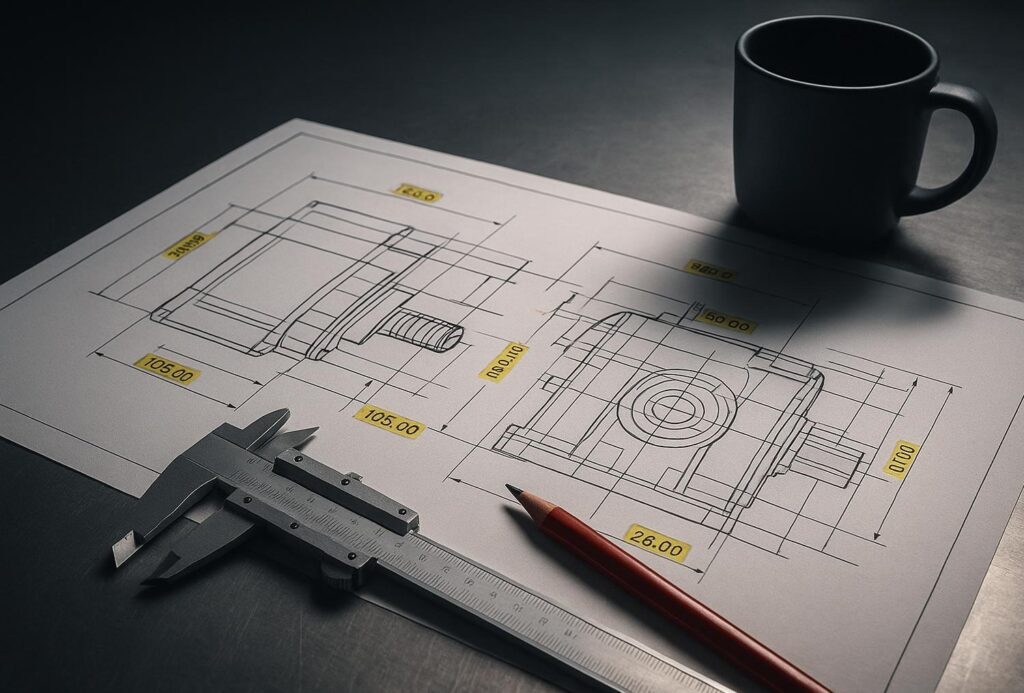
Before contacting anyone, the buyer wrote its own acceptance criteria: shaft diameter and bore at the tightest callouts, gearbox backlash limit, housing material grade, surface finish on the mating face, annual volume, and a target lead time measured from purchase order to delivery. The team also required marking the drawing before quotation, with critical dimensions, datums, threads, mating faces and acceptance criteria flagged so the inspection plan could be reviewed pre-quote (Formal Metal, live 2026). Those criteria became the yardstick for every supplier that followed.
![Annotated engineering drawing of a custom DC gearmotor with critical dimensions, datums and tolerance callouts highlighted in red]
The Challenge: Three Suppliers, Three Failed Lots, and a Line That Could Not Wait
The third rejected lot landed at incoming inspection with eight weeks of schedule left, and roughly half the gearmotor units in that shipment failed the critical bore callout. The supplier had already invoiced the lot as conforming. Replacing it meant expedited freight, a second first-article review, and a downstream customer commitment that could not move. What the buyer had never asked, across three suppliers and six months, was the OTD question: what is your on-time delivery rate for the past 12 months, and against which date is it measured (SB5 Supply Solutions)?
What Actually Went Wrong: Tolerance Drift, Not Price
The root cause was dimensional drift, not cost. The critical bore and shaft fit moved progressively across lots: the first article passed, the second lot sat at the edge of the band, and the third fell outside it. Material certification arrived with each shipment, but as procurement guidance notes, certificates are often part of the qualification criteria yet they do not replace individual assessment. No in-process inspection data existed to catch the drift before it reached the buyer’s dock, which is why the material grade on the certificate looked correct while the parts were not.
The Failed Attempts That Cost Six Months
Two earlier suppliers had already been tried. The first was chosen on price: its first article passed cleanly, then production lots drifted as the tooling wore and nobody measured between lots. The second was a domestic shop that could hold tolerance but quoted a lead time the buyer’s schedule could not absorb, and it declined to commit to volume. Six months went to two suppliers who each solved half the problem, and neither could be judged on the certificate it held.

The Decision Point: Stop Buying on Price, Start Qualifying on Process
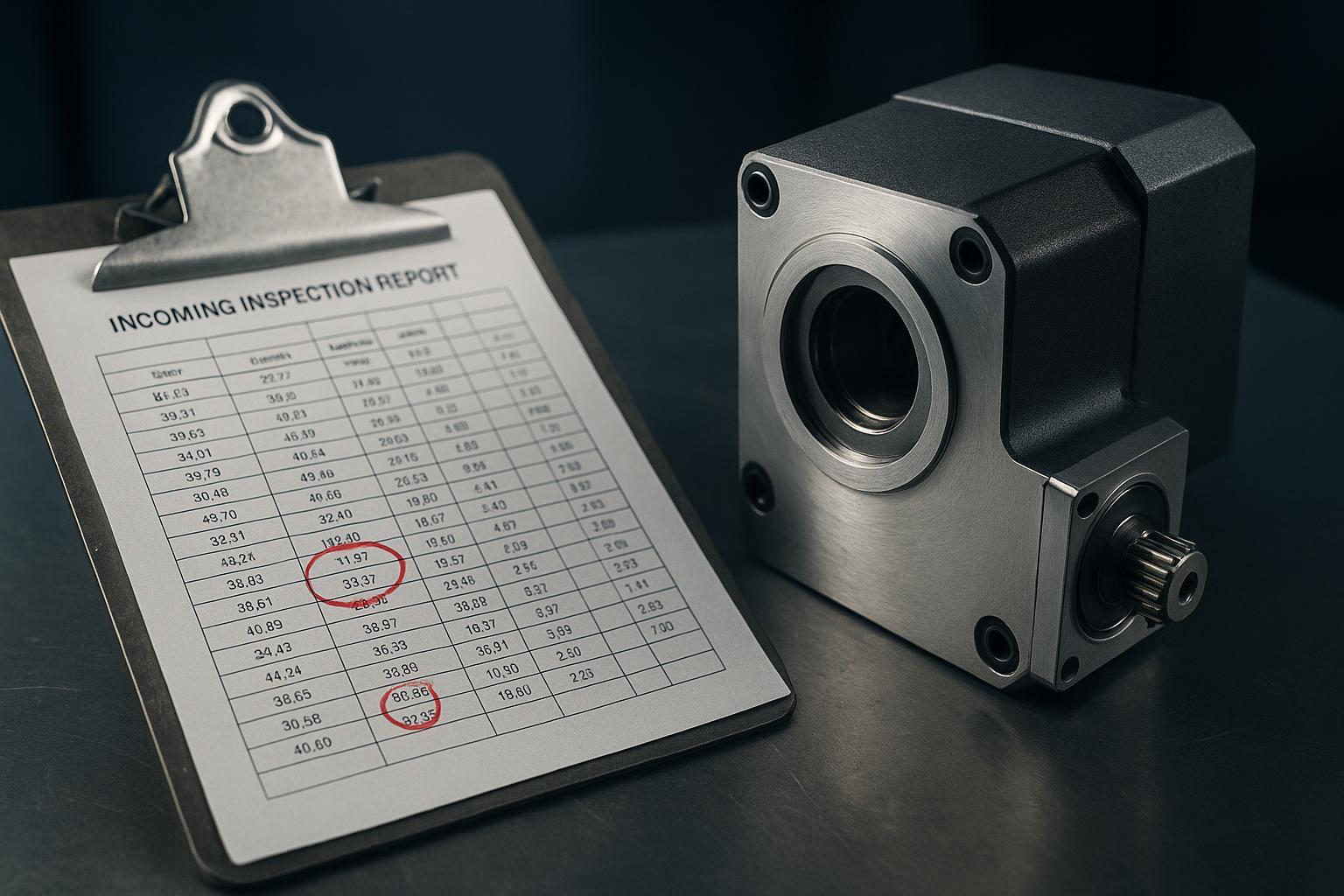
Operations issued one mandate: the next supplier must pass a documented qualification gate before any production order. The rule that made it enforceable was the verification-sample rule: refuse to place a production order with a new supplier without holding a verification sample first (SB5 Supply Solutions). That single condition turned the next supplier search into a process audit rather than a quotation comparison, and it moved the buyer’s first question from unit price to how the supplier would prove the bore stayed in band across every lot.
How the Buyer Built a Qualification Gate Instead of a Vendor List
The buyer replaced vendor list-building with a six-stage qualification gate for industrial component supplier qualification. Every candidate moved through the same sequence: self-assessment, document and certificate review, audit (virtual then on-site), sample evaluation, trial delivery, and production release. supplier qualification framework describes that progression as starting with a 150-question self-assessment covering quality management, capacities and certifications, followed by a two-stage audit and continuous monitoring of critical certificates and licenses. The buyer’s shortlist fell from eleven names to three before a single purchase order existed, and each stage carried its own pass/fail threshold. Clearing one gate did not exempt a supplier from the next.
The Four Criteria That Filtered the List From Eleven to Three
Technical competence and production capacities; quality management system and certifications; financial stability and creditworthiness; and legal compliance and sustainability standards. Evidence decided the score, not assertion. A supplier claiming “broad capacity” ranked below one that produced a machine list, shift pattern and current utilization rate.
The scorecard also forced procurement and engineering onto the same page. Engineering weighted technical competence; procurement weighted financial stability and compliance. Neither side could override the other with opinion alone, which is exactly what a decision matrix is for.
Criterion | Supplier A | Supplier B | Supplier C |
|---|---|---|---|
Technical competence and production capacities | Strong: in-house gear cutting, documented capacity | Moderate: partial outsourcing | Strong: full in-house |
Quality management system and certifications | ISO9001, IATF 16949 | ISO9001 only | ISO9001, IATF 16949 |
Financial stability and creditworthiness | Verified references, stable | Unverified | Verified references, stable |
Legal compliance and sustainability standards | Documented | Incomplete | Documented |
The Fifteen Questions That Carried the Supplier Call
What is your sample policy, and what does a sample cost?
What is your actual MOQ, and is it a hard floor or a negotiation point?
What is your lead time for a first run versus a reorder?
Where is the part actually manufactured, and how are partner facilities qualified?
Do you ship material certificates with each lot?
What dimensional inspection happens before parts ship?
What is your on-time delivery rate for the past 12 months?
What freight terms do you offer?
What are your payment terms?
Who is responsible for parts rejected at incoming inspection, and what is the RMA timeline?
Do you warehouse approved inventory for repeat orders?
Who is my single point of contact, and what is their response commitment?
What re-tooling charges apply if the design changes?
Can you provide references from two customers at comparable volume?
Why the Shortlist Came Down to Capability Evidence, Not Certificates
Certificates opened the door; they did not close it. The buyer treated ISO or IATF paperwork as a baseline filter, then asked what sat behind it. The supplier’s own quality-system timeline shows the pattern: ISO9001 in 2000, ISO14001 and OHSAS18001 added in 2009, then TS16949 for automotive applications in 2016 alongside a customer-run VDA6.3 audit. Those dates are company-stated, not independently audited, so the buyer checked them against the process evidence gathered during the audit stage instead of accepting the certificate at face value.
The transferable point is blunt: a certificate proves a system exists on paper. The audit, the sample report and the trial delivery prove it runs.
Sample and Specification Review: The Stage That Caught What Quotations Missed
The sample round is where specification discipline pays off, and it is the stage most buyers rush. A verification sample has to be held and measured before any production order is released; once a lot is running, tolerance drift is expensive to unwind. The buyer treated the sample as a gate, not a formality, and asked for the documentation set a buyer can request: material certificates, a certificate of conformance, dimensional records, first-article-style reports, and RoHS or REACH support where applicable.
Key Takeaway: Never release a production order on a quotation alone. Hold a verification sample, measure it against every critical callout, and only then commit to volume.
Locking the Specification Before the RFQ Goes Out
The buyer marked critical dimensions, datums, threads, mating faces and acceptance criteria directly on the drawing before sending the RFQ. That single step let the inspection plan be reviewed alongside the price, and it removed the ambiguity that had caused the earlier failed lots. The question of whose job it is to make a drawing unambiguous has one answer: the buyer’s.
Reading the Sample Report: Tolerance Data, Material Grade, Surface Finish
When the sample came back, the buyer checked three things against the drawing, not against the supplier’s summary. Dimensional data had to cover every critical callout, the material grade certificate had to match the grade named on the purchase order, and surface finish had to be measured against the drawing note rather than described in words. The buyer worked to a 24 to 72 hour quote turnaround benchmark for a clean RFQ, a common industry benchmark rather than a measured study, and treated a slow or evasive response as a signal in itself.
Specification item | Required evidence | Pass/fail |
|---|---|---|
Critical dimensions and datums | Dimensional report covering every callout |
|
Material grade | Mill or material certificate matched to the PO |
|
Surface finish | Measured value against the drawing note |
|
Conformance | Certificate of conformance signed by the supplier |
|
First-article review | FAI-style report on the submitted sample |
|
Restricted substances | RoHS or REACH support where the part requires it |
|
Quality Control: The Five Inspection Gates That Kept the Production Lots Inside Tolerance
The buyer’s answer to “how do I know production parts will match the approved sample?” was to require the five gated inspection checkpoints Oxmaint documents for manufacturing production, and that structure, not goodwill, is what held the lots inside tolerance. Gate 1 verified material certification documents against the purchase order and dimensionally checked raw material stock, releasing or quarantining each lot. Gate 2 approved the first article and monitored critical dimensions at defined process steps, segregating and tagging non-conforming units. Gate 3 verified tolerance compliance for every critical dimension and sent out-of-tolerance units to rework or scrap. Gate 4 covered assembly completeness, functional testing and packaging integrity. Gate 5 applied SPC sampling, control charts and process capability indices before a digital quality release authorization.
Traceability: What the Buyer Could Reconstruct After the Fact
Traceability meant three linked records, not a certificate in a folder. Lot-level material certificates tied the steel back to its heat number. Dimensional records tied each measured feature to the production run that produced it. The Gate 5 digital release authorization tied the shipped quantity to the inspection evidence behind it. If a bore had drifted, the buyer could name the lot, the machine and the shift.
Where the Process Nearly Slipped
One incoming material lot arrived with certification paperwork that did not match the purchase order revision. Under the old arrangement, that lot would have entered production while someone chased the supplier by email. Here, Gate 1 quarantined it on arrival. The supplier reissued the correct certification within two days, and the ship date held. The gate absorbed the friction instead of the schedule.
Logistics: Packing, Incoterms and Customs Clearance for a U.S. Delivery
The buyer’s landed cost was set by the Incoterm and the HTS classification, not by the quoted unit price. Bitech IPC’s guide to importing industrial hardware makes the mechanics plain: the Incoterm must name the specific place or port, FOB applies to sea freight only, EXW leaves most responsibility with the buyer while DDP shifts it to the seller, and classification is the importer’s legal responsibility rather than the exporter’s.
⚠️ Warning: The supplier’s quoted price is not your landed cost.
Choosing the Incoterm That Matched the Buyer's Risk Appetite
The buyer compared EXW, FOB and DDP against two things: whether they had a customs broker they trusted, and how much cash they wanted tied up before the goods moved. The three-letter code mattered less than the named place beside it, because that is where risk actually transfers.
Export Packing and Documentation for a Precision Component
Packing was specified as part of the order, not left to the supplier’s default. The gearmotor travelled in a moisture-barrier wrap with shock isolation, and the document pouch carried the commercial invoice, packing list, certificate of origin and material certificates. That matched the final inspection gate, where packaging integrity is checked before release.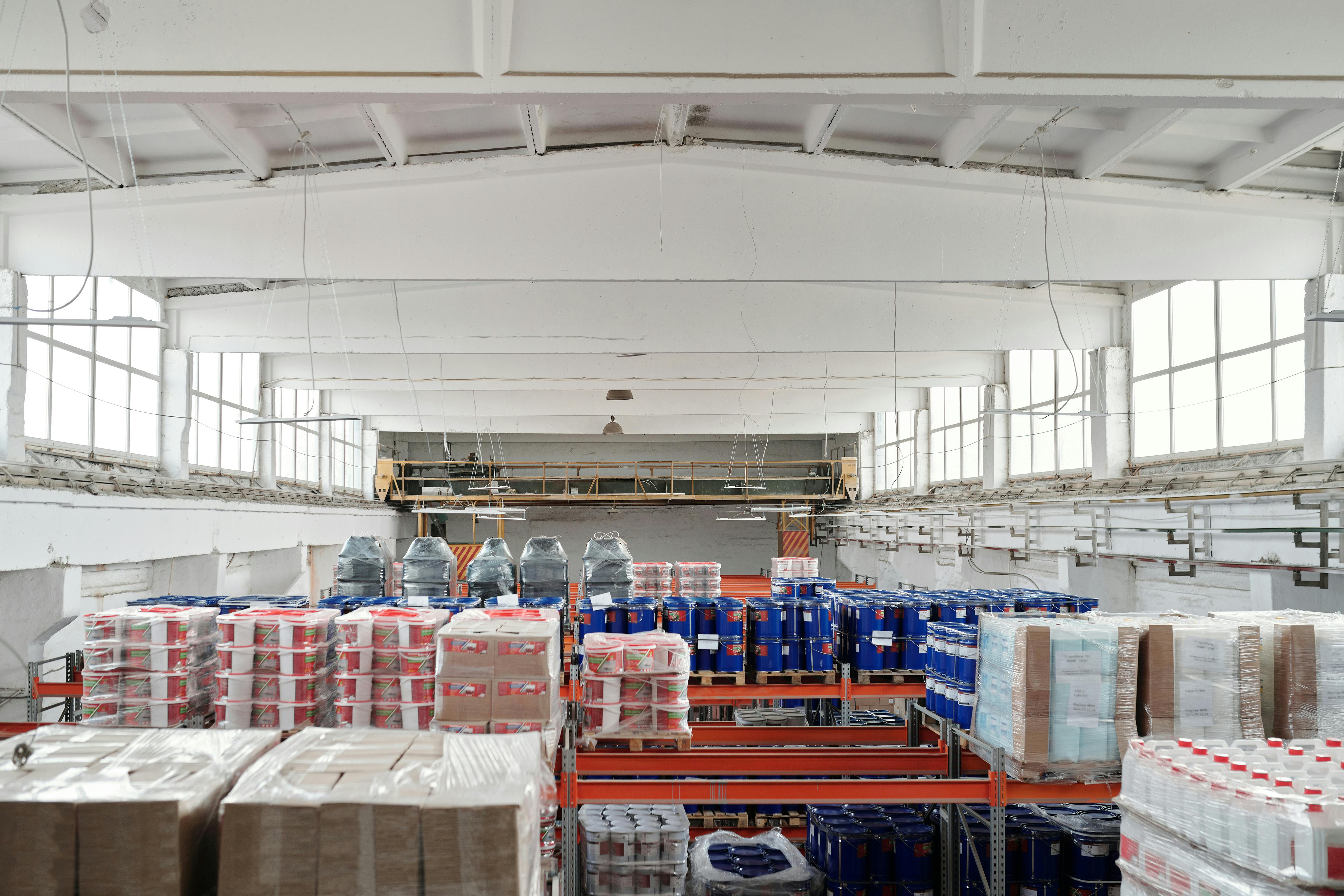
Customs Clearance: Who Owns the HTS Code
The buyer validated the HTS code instead of accepting the one on the supplier’s paperwork. A wrong code means back-duty and penalties land on the importer, and duty is assessed under the schedule in force on the date of import. No verified U.S. duty rate for this product category could be confirmed for this case study, so none is quoted here.
Final Result: A Qualified Supplier, a Delivered Order, and a Repeatable Process
The production order shipped, passed the buyer’s incoming inspection, and the assembly line restarted on schedule. More durable than the delivery itself, the buyer now holds a documented qualification process that can be reused for the next part family without rebuilding the criteria from scratch.
What Changed for the Buyer After the Order Shipped
Three artifacts outlasted the order. A qualification scorecard now scores every new supplier against the same four criteria. A standing inspection-gate requirement is written into the purchase agreement rather than negotiated per lot. And the Incoterm and HTS classification decisions are recorded with their reasoning, so the next shipment does not reopen them.
What the Buyer Would Do Differently Next Time
The buyer would define surface finish and datum references before the sample round, not after the first report came back ambiguous. The virtual audit would run before samples ship, not alongside them, so process gaps surface while they are still cheap to fix. And the HTS code would be validated before the first shipment instead of during customs clearance.
The Transferable Lesson: Qualify the Process, Not the Price
The buyer’s six months of failed lots came from unverified process, not from a bad quote. The fix was structural: a gate at each stage that a supplier had to pass before the next one opened. A cheaper quotation from an unqualified process costs more than the tolerance drift it hides.
If you are sourcing a custom component and want to run the same gate structure against a supplier, submit a sourcing request and ask for the process evidence behind the quotation.
FAQ
What does supplier qualification for custom industrial components actually involve?
It runs as a staged gate rather than a single check: self-assessment, document and certificate review, an audit, sample evaluation, and a trial delivery before production release. Certificates are often part of the criteria, but they do not replace individual assessment of the specific process that will make your part. Treat each stage as something the supplier must pass, not something you assume from a brochure.
How should a buyer run a sample and specification review?
Lock the specification before the RFQ goes out. Critical dimensions, datums, threads, mating faces and acceptance criteria all belong on the drawing at that point, not in a follow-up email after quoting. Then refuse to place a production order with a new supplier without holding a verification sample first, and request the documentation set that proves the sample matches the drawing: material certificates, a certificate of conformance, dimensional records and a first-article style report.
What quality control inspection should be required for custom parts?
Require gated checkpoints rather than a single final inspection: incoming material verification, first-piece approval, in-process inspection at defined intervals, final dimensional and functional checks, and statistical process control with a digital release record. In-process gates catch tolerance drift while the lot can still be corrected; final inspection alone only tells you how many parts you have to scrap.
What does a realistic RFQ to delivery process look like?
A clean RFQ typically draws a quote within 24 to 72 hours, though that is a common industry benchmark rather than a measured study. After the quote comes specification confirmation, sample production and review, a trial delivery, then production release and shipment. Buyers who skip the sample and trial stages usually pay for it in the first production lot.
How precise should tolerance and material grade callouts be on the drawing?
Every critical dimension needs a tolerance, a datum reference and an acceptance criterion. Material grade should be specified to a standard the supplier can certify per lot, not described loosely as “steel” or “aluminum.” Ambiguity at this stage is the most common reason a sample passes review while production lots later drift out of tolerance.
What lead time should a buyer expect for a custom component?
Lead time depends on whether tooling, a new sample or a specification change is involved, so a single number is misleading. Build the schedule around the stages: quote, specification lock, sample production and review, trial delivery, then production. Ask the supplier to quote lead time against a specific milestone date rather than from order placement.
What traceability records should ship with the order?
Request material certificates, a certificate of conformance, dimensional inspection records, and heat or lot numbers that link the finished parts back to the raw material batch. The test is whether you could reconstruct, months later, which material lot went into which shipment. If the supplier cannot answer that, the records are decorative.
Next Steps: How to Start a Sourcing Request for Custom Industrial Components
The buyer’s outcome came from qualifying on process, not from finding a cheaper part. Run the same sequence on your next custom industrial components sourcing decision:
Define the specification and mark the drawing with critical dimensions and acceptance criteria.
Build the supplier qualification criteria into a gate, not a vendor list.
Run the sample and specification review before any production order.
Agree the quality control inspection for custom parts, plus the traceability records that ship with the order.
Settle Incoterms, destination port and who owns the HTS code.
Hold a verification sample before releasing a production order.
Each role has one job. Engineering prepares the drawing and acceptance criteria. Operations confirms the deadline and annual volume. Procurement runs the supplier call and the scorecard, then takes the decision through internal approval. Executives approve the gate itself, so the next RFQ to delivery process does not restart from zero.
Have a part three suppliers could not hold to tolerance? Changzhou Duowei Electric Co., Ltd. offers customized development services and documents its qualification, sample review and gated inspection steps, so you can compare it against your shortlist on evidence rather than price. Send the drawing, the annual volume, the target lead time and the destination port, and an engineer will review the specification with you. Submit a sourcing request